

01 Our Story
Born From Two Decades Inside The Rooms We Now Redesign.
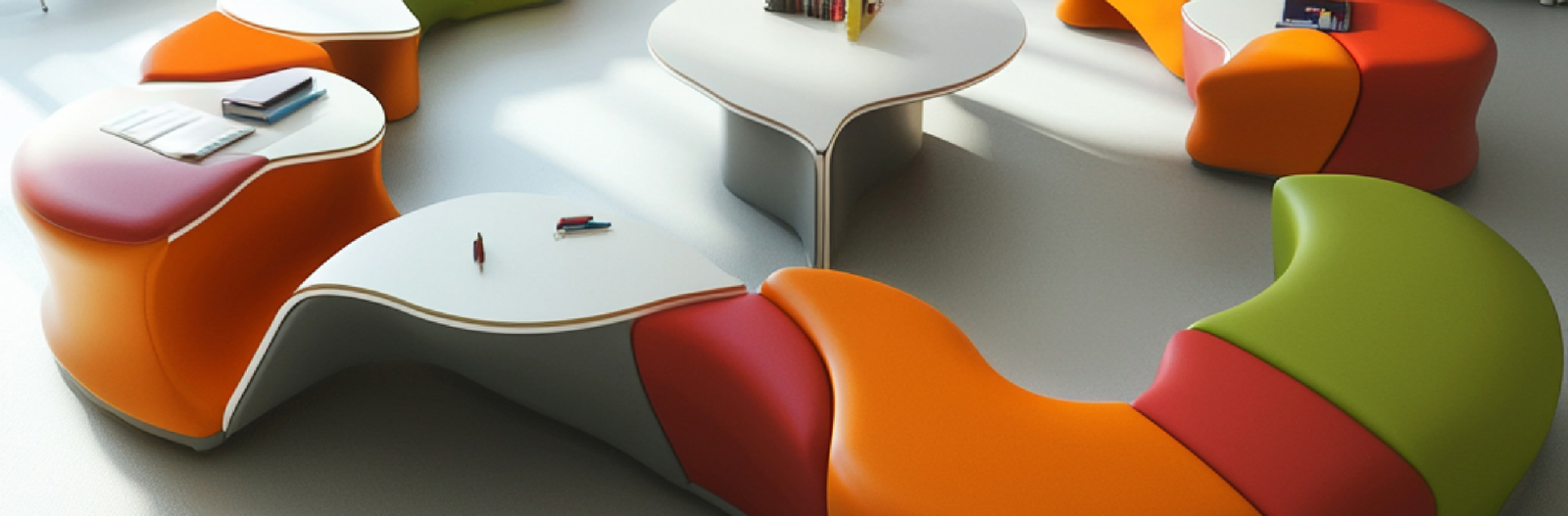
Theory Space did not begin in a design studio. It began in a staffroom, a corridor, a classroom — where we spent more than twenty years watching the gap between great pedagogy and rigid physical space cost students their potential.
We observed something that frustrated us profoundly: the best schools were investing in teacher training, in curriculum development, in digital tools — and completely neglecting the one lever that research consistently flags as a direct determinant of learning outcomes. The physical environment. Not as decoration. As pedagogy made material.
The Third Teacher
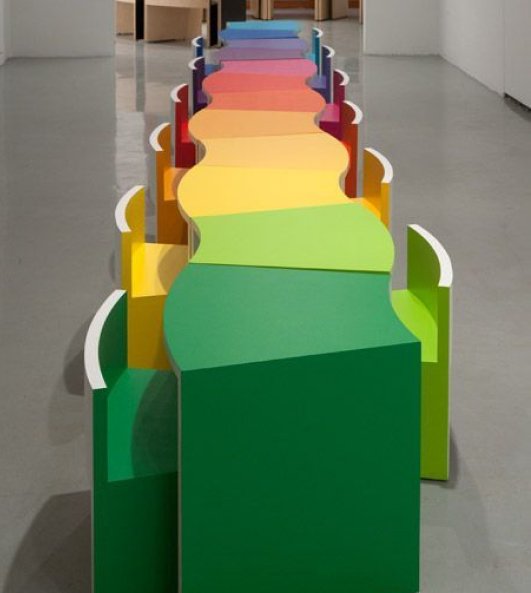
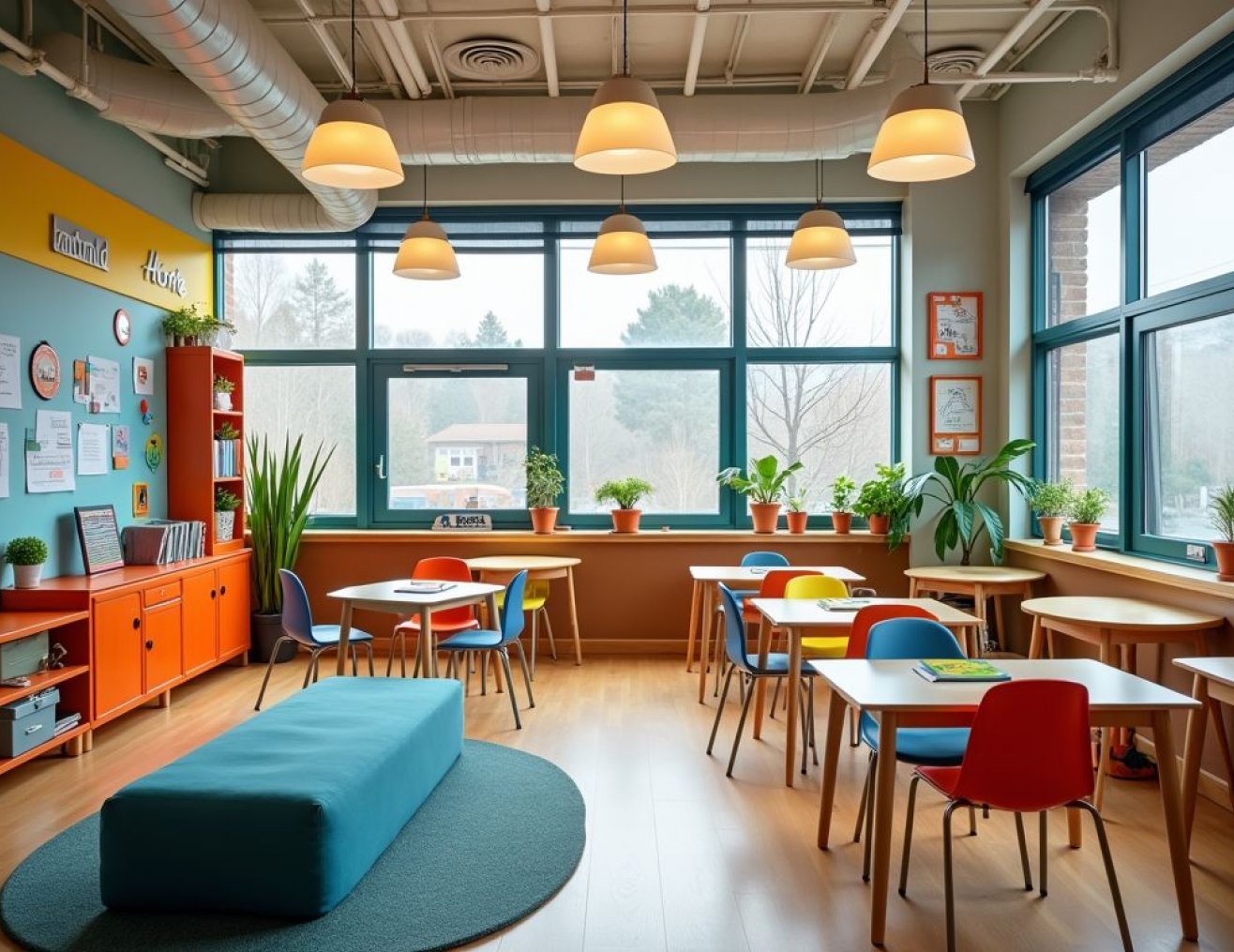
"The physical environment is the Third Teacher." — Loris Malaguzzi. Research confirms up to 15% of academic outcome variance is directly attributable to physical space design. The room teaches. We are deliberate about what it teaches.
Explore 5 PrinciplesFour Principles That
Guide Every Environment.
Our work is guided by four foundational design principles. These are not abstract values — they are practical constraints that shape every material choice, every spatial decision, and every piece we engineer.
Agility
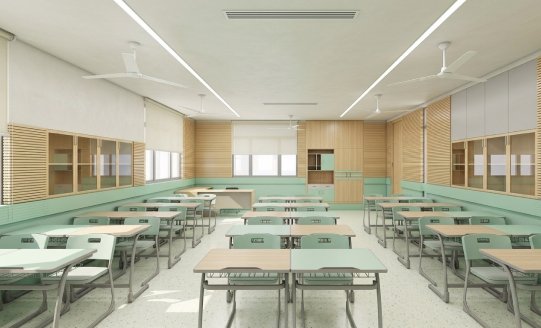
Spaces must shift from lecture format to collaborative pods in under 60 seconds — adapting in real time to the pedagogy, not constraining it.
Ergonomic Equity
Comfort is the baseline for focus. We design for developing bodies so physical well-being translates directly into sustained mental endurance.
Aesthetic Dignity
Premium materials inspire respect for the learning environment and elevate the psychological state of both students and educators.
Spatial Intelligence
Every square metre is purposeful. We apply cognitive science to ensure the room itself becomes an active participant in learning.
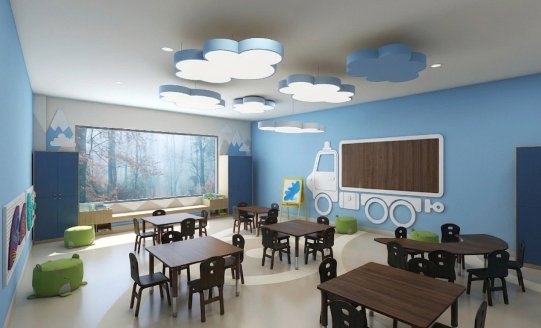
 Agility in Action
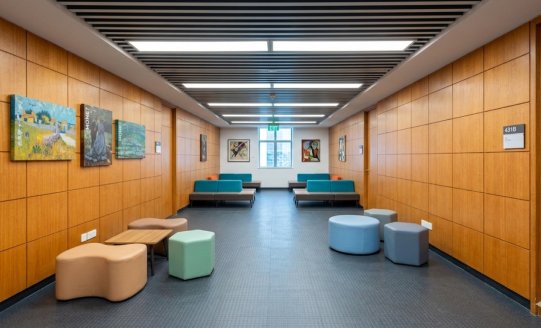
 Ergonomic Equity
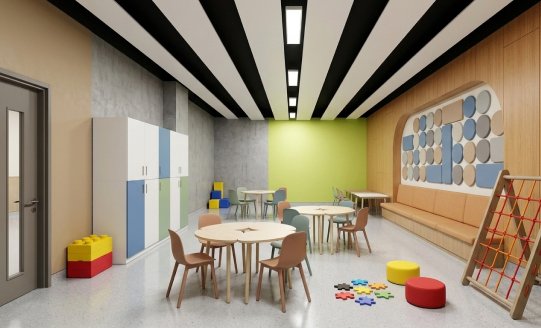
 Aesthetic Dignity
 Spatial Intelligence
03 Our Framework In Action
From Principles To Practice — How The Framework Comes To Life.
The Seven Spaces
Modern education doesn't happen in one room. It happens across seven distinct environments — each designed for a specific mode of thinking, collaboration, and discovery.
Explore Seven SpacesThe Cognitive Design Method
We do not begin with our catalogue. We begin with your curriculum. Every design decision traces back to a specific learning outcome through our five-stage method.
Our ProcessFive Principles That Govern Every Environment We Engineer.
These are not abstract values. They are the practical, philosophical, and ethical constraints that govern how we design — and how we decide what is good enough to carry the Theory Space name.
Architectural
Integrity
Integrity begins with what we build and how honestly we build it.
We believe that the spaces students inhabit communicate how much they are valued. Our integrity means honesty in materials, uncompromising durability in craftsmanship, and transparency in process. We build learning tools that withstand the test of time and the rigour of daily institutional life.
Universal
Inclusivity
Inclusion starts when every learner feels physically and psychologically supported.
No two minds process the world in exactly the same way. We design for ergonomic equity — adaptable, sensory-conscious environments that ensure every single student feels physically supported and psychologically welcomed, regardless of their learning profile.
Pedagogical
Innovation
Innovation matters only when it helps teachers teach and students engage.
Innovation at Theory Space is never just about aesthetics; it is about functionality driven by research. We innovate so that a room can transition from independent study to collaborative pods in under sixty seconds, ensuring the space serves the teacher's strategy.
Devotion
to Potential
Every space should awaken curiosity and honour a learner's potential.
We are devoted to human potential. We understand that the physical environment is the Third Teacher. We are driven to create spaces that spark curiosity, demand respect, and make a child excited to walk through the door every morning. This is a commitment to shaping the future of learning.
Cognitive
Impact
Design has value only when it delivers measurable educational outcomes.
We define our impact not by the volume of rooms we furnish, but by the outcomes those rooms facilitate: deepened focus, heightened collaborative energy, reduced physical fatigue, and elevated academic performance. We design backwards from that measurement, always.